













In an era of growing corporate consolidation, labor power is as important as ever.
The statistics are clear: not only do unionized workers, especially those of color, make more money, but they also receive benefits such as healthcare at higher rates.
And while constant mergers and growing austerity may seem separate from the realm of higher education, the same principle applies to private universities. At the end of the day, they also place profitability at the top of their priorities.
This is at the core of why St. John’s University President Rev. Brian J. Shanley announced the school’s termination of both the American Association of University Professors Chapters (AAUP) and its partner association, the Faculty Association (FA).
His written statement following last Wednesday’s rally and the broader community’s response, which was sent in an email to student leaders, further lent credence to this notion.
Its sheer vagueness, evidenced through statements such as “Yet the traditional collective bargaining model, established over a half century ago, has proven too rigid to allow for the rapid innovation our students and faculty deserve,” shows that the administration doesn’t have a clear or justifiable reason for the decision.
The closest thing to a coherent, connected point centered around growing issues in the field of higher education as a whole. These included fewer college students in general, federal funding cuts and increased competition to gain nontraditional learners for a college setting.
If the presence of a faculty union relates to these in any way, it would further justify the necessity of one to maintain and gain strong instruction, hopefully reinvigorating the importance of college for young people. The same goes for the nontraditional learner competition.
This is why the best we can go off of is the recent 243-day-long contract stalemate they’ve engaged in, following demands from the AAUP chapter to increase professor pay to match the rising costs of living, and to improve adjunct faculty salaries to match CUNY standards.
Despite the understandability of the demands, they clearly were unacceptable within the Board of Trustees’ grand design.
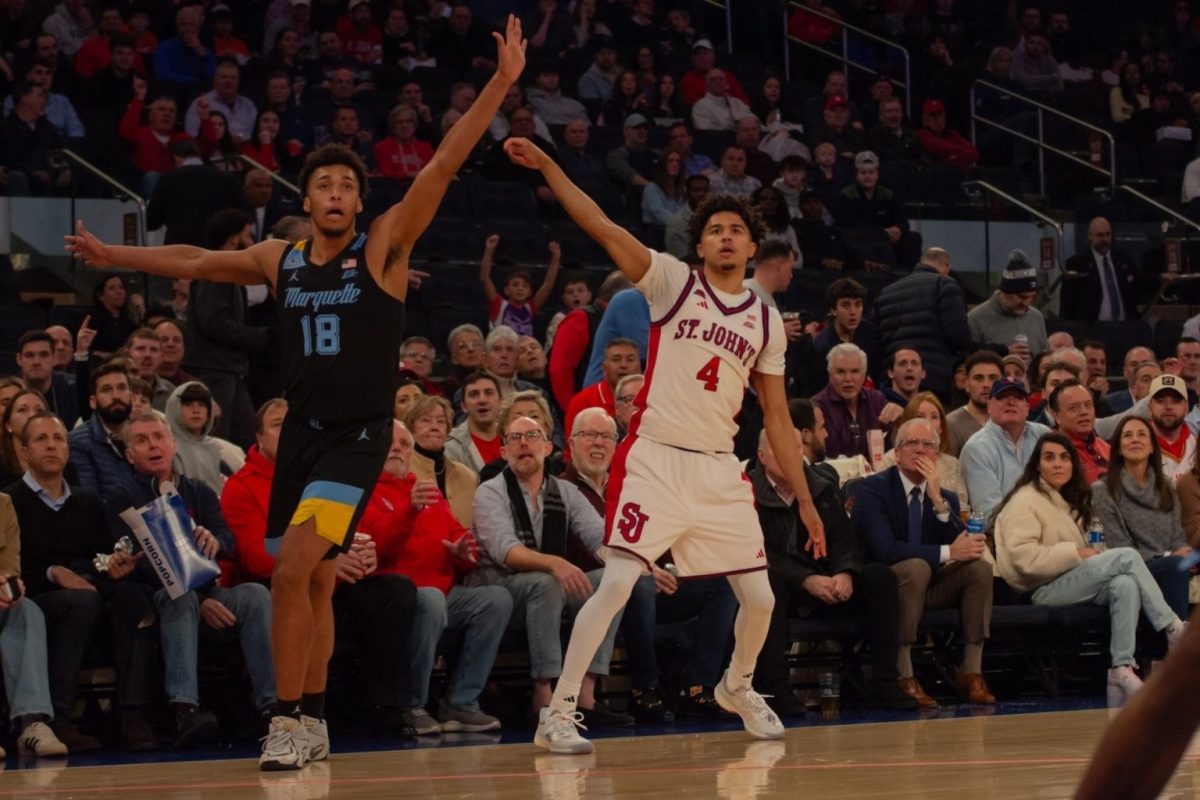
They faced a choice: either to lose profit for themselves, their glorious basketball team and any other non-academic endeavor, or take the nuclear option by eliminating the union issue entirely.
They chose the latter. They observed a community that they played a role in demobilizing and believed, “We [don’t] have the patience, the time and the skill to organize,”said College of Pharmacy & Health Sciences Representative, Hira Shafeeq.
They got away with abandoning the Staten Island Campus, closing the DAC Taco Bell, demolishing the gate 4 parking lot and a plethora of other cost-cutting initiatives. So in their eyes, why not go full tilt and do away with any problems non-admin-connected organizations might bring?
This spells a dark future for the University, not only for the already underpaid faculty, but especially for us, the students.
Strengthening the basketball team and ridding excess campuses fattens the pockets of the admin and brings outside eyes onto the University, but what about the other 99% of those within the community?
If they’re not allowing professors to bargain and improve their work conditions, the quality of instruction will decline. And if they’re willing to worsen the quality of instruction, why would they care about improving academic facilities or programs as a whole?
It fell under the radar amidst the union news, but it was recently announced that those in combined degree programs can no longer become GAs in any department, a job that previously covered 50% of the cost of a master’s degree.
Developments such as these will continue to happen. That’s why Wednesday’s rally and the continued organizing of the AAUP chapter were important then, and are increasingly important now.
Just as in traditional industries, which have seen consistent wage stagnation amidst increases in rent, groceries, etc., late-stage capitalism is worsening the conditions of students and workers in higher education.
But another similarity, one that the administration and corporate executives bank on us forgetting, is that without the workers, students, professors and all who make up a company or university, their power is nothing.
We must use this reality to disrupt and organize at a mass scale.
Sign the petition set up by the AAUP chapter, share it with your friends and participate in any pro-union initiatives you can on campus.
We won’t all be in Jamaica, Queens, forever, but to live up to our mission and to leave this place better than we found it, action is essential.


Diane Hardej • Mar 5, 2026 at 7:41 am
I’m a SJU employee for 23 years, a faculty member since 2007 and a double alum of the university. I can tell you that I’ve seen faculty morale decline in the last 10 years but I’ve never seen faculty morale as low as it is now. Graduate fellowships are declining and we want our students supported. Decision are made FOR us instead of WITH us. My students are the only thing that keep me going. Faculty conditions effect student learning Fr. Shanley! If you want to earn back faculty trust, come back to the table and hand’s off our unions.
Faculty Union Supporter • Mar 4, 2026 at 8:17 am
Let’s also talk about an executive and others that violated University policy. I wonder why there is a “Professional Development Day”. Is it to save face from a situation that happened before then?